From Lab Discovery to Global Innovation

1oo Stories People From Lab Discovery to Global Innovation: How UMCES Research Sparked the Creation of Bay Instruments In the early 1990s, Todd Kana was a Research Associate Professor at the University of Maryland Center for Environmental Science’s Horn Point Laboratory, immersed in the complex world of aquatic photosynthesis and nutrient cycling. At the time, […]

Spot a Dolphin in the Bay? There’s an App for That
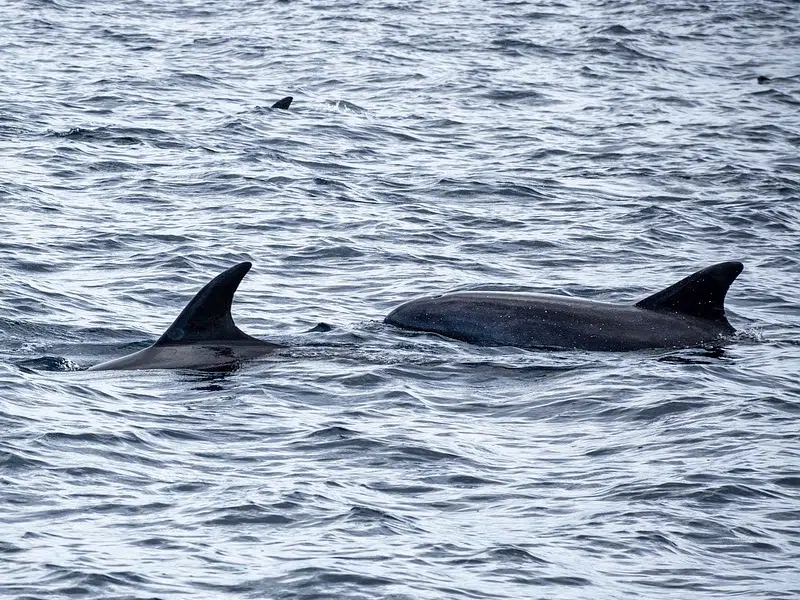
1oo Stories People If you’ve ever been lucky enough to catch a glimpse of a dolphin gliding through the Chesapeake Bay, you’re not alone—and now, there’s a way to share that moment and contribute to science while you’re at it. Thanks to the Chesapeake DolphinWatch app, now in its ninth season, everyday people can log […]

Groundbreaking Research at the North Pole

1oo Stories Discoveries In November 2022, scientists Lee Cooper and Jackie Grebmeier from the Chesapeake Biological Laboratory reached the North Pole as part of an Arctic oceanographic cruise aboard the US Coast Guard Cutter Healy. The two-month research expedition, which was part of the Synoptic Arctic Survey, focused on assessing the current state of the […]

No One Anticipated This

1oo Stories Discoveries Longtime water quality monitoring in the Chesapeake Bay watershed revealed unintended benefits of the Clean Air Act of 1990. Read More

1OO Stories

The New Generation of Leaders

Throughout its history, UMCES has graduated hundreds of new environmental leaders. Today’s UMCES alumni are able and eager to take on the mounting challenges facing our natural world. Here’s just one example of an UMCES alum making a difference.

1OO Stories

The Bay Gets a Grade

In 2007, UMCES Integration and Application Network released the first Chesapeake Bay Report Card. Take a look at how far we’ve come.

1OO Stories

No One Anticipated This

Longtime water quality monitoring in the Chesapeake Bay watershed revealed unintended benefits of the Clean Air Act of 1990.

1OO Stories

Meet the Rachel Carson

Flagship of UMCES’ research fleet, the Rachel Carson makes Chesapeake Bay science happen on the water.

1OO Stories

A Win-Win Partnership

The need to dispose of Baltimore ship channel dredge material created an unprecedented partnership opportunity for a 20+ year study on ecosystem restoration on the Chesapeake Bay’s Poplar Island.

1OO Stories

A Visionary Founder

Who was Reginald Truitt, founder of what would become UMCES? “IN THE SUMMER OF 1919, a brand new graduate student carried a borrowed microscope to a creek north of Solomons Island, Maryland, a knob of land near the meeting point of the Patuxent River and the Chesapeake Bay. In a cramped fisherman’s shack, he set up a makeshift laboratory, installed his microscope, and began studying oyster biology.”